 |
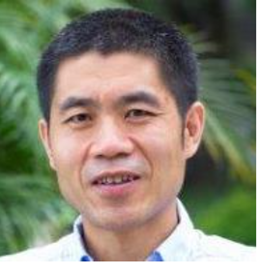
Title: Some Thoughts and Work on Automated Algorithm Designemail:qingfu.zhang@cityu.edu.hkQingfu ZhangChair Professor, City University of Hong KongAbstract: Automated Algorithm Design (AAD) seeks to reduce reliance on domain specialists for the manual construction of problem-specific algorithms, while mitigating inherent human limitations, including cognitive constraints, experience-driven biases, and the limited capacity to systematically explore the large space of potential algorithms. AAD research can also deepen our fundamental understanding of the knowledge generation mechanisms underlying artificial intelligence. In this talk, I explain why real-world practical applications demand the development of numerous distinct algorithms. I argue that the human algorithm design pipeline can be naturally realized by combining large language models (LLM) and evolutionary computation (EC), and evolution plays a critical role in generating novel algorithmic designs. I introduce the Evolution of Heuristics (EoH), a general framework that integrates large language models (LLMs) and evolutionary computation (EC) to automatically generate algorithms. EoH records both the executable code and high-level thoughts of every candidate algorithm, allowing the framework to fully leverage LLM semantic capabilities and distill valuable high-level design knowledge. I present four EoH variants (1) Multi-objective EoH (MEoH), which jointly optimizes algorithm performance and runtime complexity via AST-based code dissimilarity and Pareto dominance management, (2) EoH-Set (EoH-S), which evolves complementary heuristic sets rather than single algorithms to boost generalization across out-of-distribution problem instances, (3) Multimodal LLM-assisted Evolutionary Search (MLES), integrating visual trajectory data with textual prompts to design interpretable control policies for continuous decision tasks such as lunar lander and car racing; and (4) EvoEngineer, an extended branch targeting automatic CUDA kernel optimization to accelerate GPU computation for AI training pipelines. I also show how EoH helps us to design an algorithm to win the recent 30-day competition for finding new best known solutions for 100 large-scale CVRP instances. Bio: Dr. Ting Hu is currently Chair Professor of Computational Intelligence in the Department of Computer Science at City University of Hong Kong. His research group focuses on metaheuristic algorithms and artificial intelligence. The MOEA/D algorithm he proposed is one of the two most widely used frameworks in the field of evolutionary multi-objective optimization and has been extensively adopted across numerous application areas. He has been named a Highly Cited Researcher in Computer Science eight times since 2016 and is an IEEE Fellow. He received the IEEE Computational Intelligence Society Evolutionary Computation Pioneer Award in recognition of his contributions to multi-objective evolutionary computation. Website: https://www.cityu.edu.hk/stfprofile/qingfu.zhang.htm |
 |
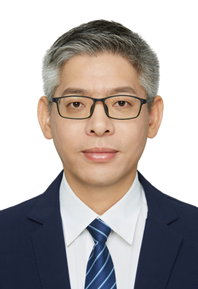
Title: Why Evolution Favors Simplicity: The Role of Neutral Networksemail: ting.hu@queensu.caTing HuProfessor, School of Computing, Queen’s University, CanadaAbstract: Neutrality allows evolutionary search to move through the search space without affecting fitness, while simplicity bias describes the tendency for evolutionary systems to favor simpler solutions. Although both phenomena have been widely studied, their relationship remains poorly understood. In this talk, I present evidence that neutrality is a key mechanism underlying simplicity bias. Using a Boolean Linear Genetic Programming framework, we design fitness functions that increase neutrality through solution symmetry and investigate their effects on neutral network structure and search behavior. Our results show that simpler phenotypes possess greater redundancy and more highly connected neutral networks, making them easier to discover through neutral exploration. Moreover, increasing neutrality significantly improves the ability of evolutionary search to reach complex target solutions. These findings provide a new perspective on the relationship between neutrality, representation, and search, with implications for the design of more effective evolutionary algorithms. Bio: Ting Hu is an Associate Professor at the School of Computing, Queen’s University in Kingston, Canada. Her research focuses on evolutionary computing, explainable AI and machine learning applications in biomedicine. Ting serves as senior Special Communications Editor of the journal Genetic Programming and Evolvable Machines, as well as an Associate Editor of the journal BMC BioData Mining. She serves as the Editor-in-Chief of 2026 ACM Genetic and Evolutionary Computation Conference (GECCO). |
 |
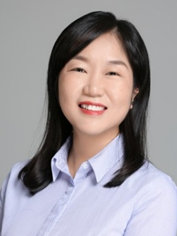
Title: Educational Science Intelligence (AI4ES): A Paradigm Shift in AI-Driven Educational Researchemail:amzhou@cs.ecnu.edu.cnAimin ZhouProfessor, East China Normal University, ChinaAbstract: Artificial intelligence is expanding new methods and pathways for educational science research. This report focuses on "AI for Education Science (AI4ES)" and introduces how the team's self-developed PedaScope educational research platform supports AI4ES research practices. Following the main thread of "research question formulation—learning process analysis—research hypothesis testing—educational law discovery," the report demonstrates the integration of AI into the entire educational research process, along with its phased achievements. The discussion will revolve around the synergistic mechanisms of domain knowledge in education, real-world scenario data, and AI technology, while addressing key topics such as human-AI collaboration, empirical validation, and research ethics. It further elaborates how AI drives educational research from efficiency improvement to deeper understanding and theoretical innovation. Bio: Aimin Zhou, Dean of the School of Computer Science at East China Normal University, Director of the Shanghai Institute of Intelligent Education, and Full-Time Mentor at Shanghai Chuangzhi College. He earned his bachelor's and master's degrees in computer science from Wuhan University and his Ph.D. in computer science from the University of Essex, UK. As the head of Shanghai's IV-class peak discipline "Intelligent Education," he leads the city's major breakthrough project "Chinese Version of the Educational Large Model." His primary research areas include artificial intelligence and intelligent education. With over 80 SCI Zone 1/CCF Category A academic papers published in journals and conferences, his work has been cited more than 14,000 times on Google Scholar. He serves as associate editor or editorial board member for journals such as SWEVO, CAIS, CJE, and Computer Education. Awards and honors include the Shanghai Oriental Talent Leadership Program, Shanghai Natural Science Award (First Prize), Baosteel Outstanding Teacher Award, Excellent Computer Science Educator Award, Shanghai Higher Education Outstanding Teaching Achievement Award (Second Prize), and Elsevier's 2020-2025 China Highly Cited Scholars. |
 |
Title: Constrained Multi-objective Optimization via Pareto Front Relationship Analysisemail:fengwang@whu.edu.cnFeng WangProfessor, School of Computer Science, Wuhan UniversityAbstract: Constrained multi-objective optimization problems (CMOPs) seek a high-quality Pareto set under constraint satisfaction, yet existing methods often fail to well balance convergence, diversity and feasibility. Recently, dual-population and multi-stage methods have become popular and show promising performance, which exploit Pareto front relationships to guide constraint handling. However, the CPF–UPF relationship keeps changing along evolution, making it hard for existing algorithms to continuously track and utilize such variations. In this talk, we present an adaptive constraint handling mechanism based on dynamic Pareto front relationships. By analyzing the relationship evolution of CPF–UPF and CPF–CPF, offspring generation strategies are designed to enhance the optimization performance. Bio: Dr. Feng Wang is a Professor and Doctoral Supervisor with the School of Computer Science, Wuhan University, China. She currently serves as an Executive Member of the CCF Technical Committee on Computational Economics, and a Standing Committee Member as well as Deputy Secretary-General of the Technical Committee on Intelligent Simulation Optimization and Scheduling, China Simulation Federation. She also acts as Associate Editor for ESWA、IJCINI and Guest Editorial Board Member for INS and CAIS, and has served on the Program Committees of numerous CCF-A international conferences. Her research interests mainly include intelligent optimization, machine learning, and computational finance. She has authored or co-authored over 70 papers in top-tier CCF-A conferences and IEEE Transactions journals, with multiple papers selected as ESI Hot Papers and Highly Cited Papers. She has been listed in the World’s Top 2% Scientists for five consecutive years. She has led four National Natural Science Foundation of China (NSFC) projects, one sub-project of major NSFC programs, and two key research projects. She has received the First Prize of the Science and Technology Progress Award from the Chinese Association of Automation and the First Prize of Higher Education Teaching Achievement Award from the China Simulation Federation. |
 |
Title:Time Series Analysis_Methods and Applicationsemail:Wensheng.zhang@ia.ac.cnWensheng ZhangProfessor, Institute of Automation, Chinese Academy of Sciences(CASIA)Abstract: Among all time series analysis techniques, time series clustering is one of the most widely used methods, as it can identify interesting patterns in the absence of supervision, and facilitate other data analysis tasks, such as classification, anomaly detection, and indexing. The unique characteristics of time series, including high-dimension, warping and the integration of multiple elastic measures, pose challenges for the present clustering algorithms, most of which take into account only part of these difficulties. We make an effort to simultaneously address all aforementioned issues in time series clustering under a unified multiple kernels clustering method. The proposed approach can be extended to more challenging multivariate time series clustering scenario in a direct but elegant way. Extensive experiments on 85 univariate and 10 multivariate time series datasets demonstrate the significant superiority of the proposed approach beyond the baseline and several state-of-the-art MKC methods. Bio: Wensheng Zhang received his Ph.D. degrees from the Institute of Automation, Chinese Academy of Sciences (CAS), and at present he is a Professor, Ph.D. Tutor and Deputy Chief Engineer of the Institute of Automation, CAS, Chief Professor of Artificial Intelligence at University of CAS. He has wide research interests, mainly including artificial intelligence, machine learning, pattern discovery of big data, cross-media analysis and reasoning, video image understanding, etc. He has published more than 270 papers in top-tier international journals/conferences, obtained more than 70 domestic and foreign patents, 1 second prize for China Science and Technology Progress Award, and 5 second prizes for Provincial/Ministerial Science and Technology Award. |